TRT blood work: what gets tested, how often, and why
By Chad Barnsdale · Updated 2026-09-11
This guide is general information, not medical advice. Only your clinician can interpret your results.
Lab work is the backbone of testosterone therapy, and it is also where costs and confusion pile up. Knowing what each test is for makes the schedule feel less arbitrary and helps you spot a clinic that monitors properly.
The usual tests
| Test | What it measures | Why it is checked |
|---|---|---|
| Total testosterone | All testosterone in the blood | Starting point for diagnosis and dose tracking |
| Free testosterone | The unbound fraction available to tissues | Adds context when total is borderline or SHBG is unusual |
| SHBG | Protein that binds testosterone | Helps interpret total versus free |
| Estradiol | An estrogen made from testosterone | Monitored because levels can rise on therapy |
| Hematocrit | Share of blood made of red cells | Therapy can raise it; high values need attention |
| PSA | A prostate-related protein | Part of baseline and ongoing safety screening |
Each of those has a short explainer in this site’s glossary if you want the definition. What matters here is the buyer-side question: which of these will you pay for, and how often?
Diagnosis versus monitoring
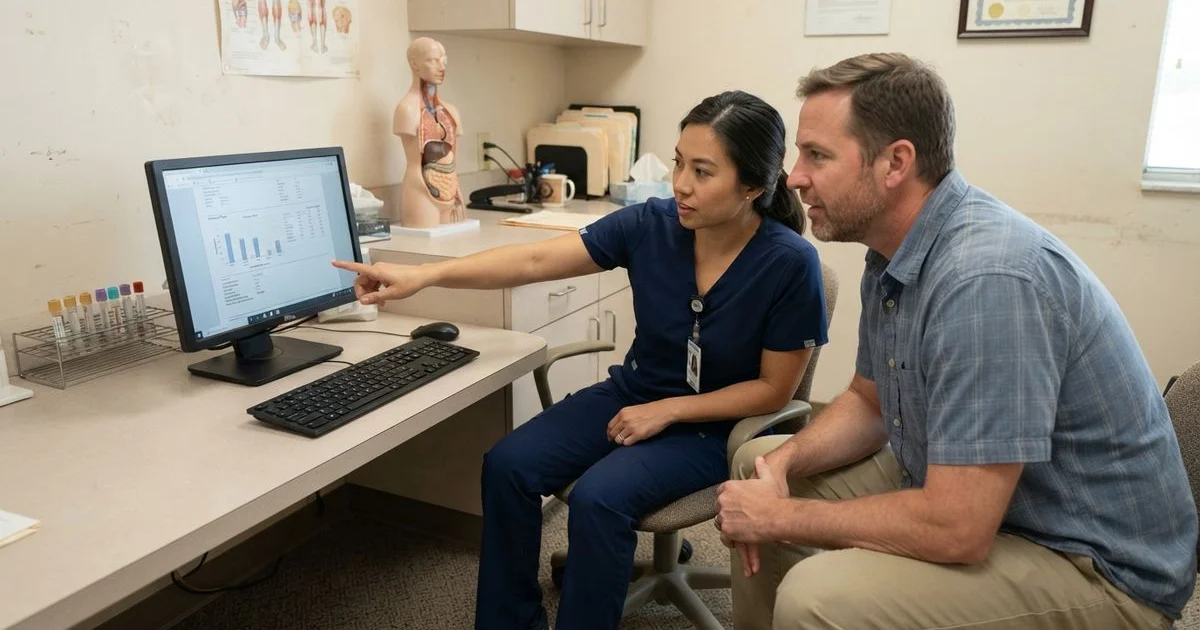
Before treatment, testing is about whether there is a problem to treat. Professional guidance, such as the Endocrine Society’s guideline, supports confirming low results with repeat morning measurements and matching them to symptoms. After treatment starts, testing shifts to monitoring: checking that levels are in a reasonable range and that safety markers, especially hematocrit, are not drifting.
What the schedule often looks like
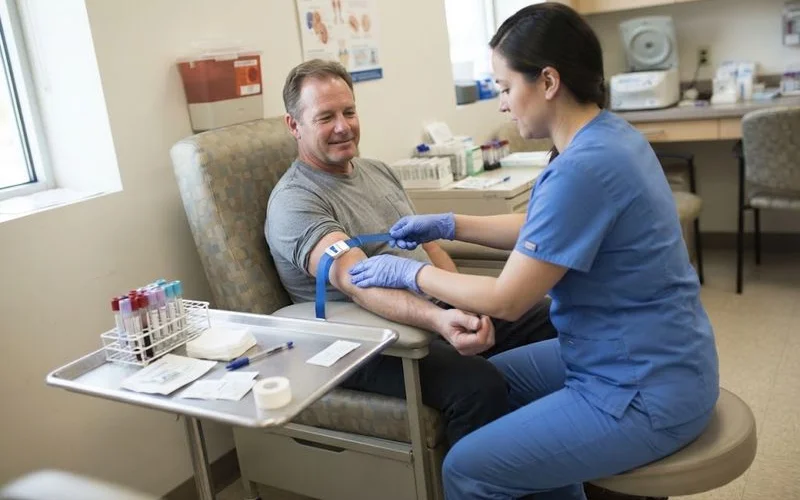
There is no universal schedule, so treat this as a rough pattern rather than a rule. Many clinicians check labs a few months after starting or after any dose change, then space them out as things settle, with a periodic check thereafter. A clinician might test sooner if symptoms change or if a result is outside the expected range.
Where the money goes
The first-year calculator on this directory models follow-up panels at roughly $130 each at a commercial lab or $200 each when a clinic bills them, with two to four panels in year one. Those are planning assumptions, not quotes. Some memberships include labs entirely. The TRT cost guide shows how labs fit into the monthly price.
Reviewers in this directory often mention lab costs that were not disclosed upfront. That is one person’s experience at one clinic, but it is common enough to treat as a standing question: ask what each panel costs before you consent to it.
Practical tips
- Schedule draws in the morning if your clinic asks for it.
- Keep copies of every result so you can take them elsewhere.
- Ask whether outside lab results are accepted.
- Ask what range the clinic aims for and who decides when a dose changes.
- If a result worries you, ask for a plain-language explanation, not just a number.
What a careful clinic does
It explains each test, shares the results, tells you what changed and why, and does not adjust medication without data. It also tells you which results would prompt a change in plan. That kind of explanation is what reviewers describe when they mention a clinic that explains things clearly.
Next steps
Choosing where to get tested is a separate decision from choosing where to be treated, though many people do both at the same place. Practices focused on hormone care are collected in the hormone therapy clinics hub. The tools on the home page can estimate lab-inclusive costs, and How We Rank shows how listings are scored.
Questions people ask
- Why does TRT need repeat blood tests?
- Testosterone therapy changes several markers, including red blood cell concentration. Repeat testing lets a clinician check that your levels and safety markers stay in an appropriate range.
- How often are labs repeated?
- Schedules vary. A common pattern is a check a few months after starting, then at longer intervals once things are stable. Your clinician sets the schedule for you.
- Do I need to fast?
- Some panels need fasting and many testosterone draws are done in the morning. Follow your clinic's instructions for each test.
- Can I get the same tests at a commercial lab?
- Often yes, if your clinic accepts outside results. Ask first so you do not pay twice.
Related on this site
- Browse hormone therapy & optimization clinics providers
- What testosterone replacement therapy costs in Florida and what changes the price
- TRT delivery methods compared: injections, gels, pellets and oral options
- TRT safety: known risks and the questions to ask your clinician
- Erectile dysfunction and low testosterone: how the two relate and what a workup covers
- All guides →